Functional Resume Format — Guide & Template
A functional resume organizes your experience by skill category rather than by job. Instead of listing roles chronologically, you group your accomplishments under headings like "Project Management," "Data Analysis," or "Customer Relations." This format can be effective for career changers, but use it carefully — many recruiters view functional resumes with suspicion because they can obscure employment gaps.
Build your functional resume now →When to use
- You're making a significant career change and your job titles don't reflect your transferable skills.
- You're returning to work after an extended break (caregiving, health, education).
- Your most relevant experience isn't from your most recent job.
- You have extensive freelance or project-based work that doesn't fit a traditional timeline.
When to avoid
- You have a strong, progressive career history — use chronological instead.
- You're applying to a traditional industry (finance, law, government) that expects chronological.
- ATS compatibility is critical — functional resumes parse less reliably.
- The job posting specifically asks for a chronological work history.
Functional Resume Structure
- Contact Header Same as chronological — name, phone, email, LinkedIn, location.
- Professional Summary Especially important in a functional resume. 3-4 sentences that frame your career narrative and explain (implicitly) why you're using this format.
- Skills Categories Group accomplishments under 3-4 skill headings relevant to the target job. Each category gets 3-5 bullets with specific achievements — still quantified, still action-verb-led.
- Work History Brief list of employers, titles, and dates — no bullets. This section exists to show you have employment history, not to detail it.
- Education & Certifications Degrees, certifications, and relevant training. Can be positioned higher if your education is more relevant than your work history.
Example
- Managed 12 cross-functional projects ($50K–$500K budget range) from planning through delivery, with 92% on-time completion rate.
- Coordinated teams of 5-15 people across engineering, design, and marketing to deliver product launches on quarterly cadence.
- Implemented Agile framework for a 30-person team, improving sprint velocity by 40% within 3 months.
Pro Tips
- Don't use a functional resume just to hide gaps — recruiters will notice. Address gaps honestly in your cover letter.
- Each skill category should map directly to a requirement in the job description.
- Still include specific numbers and outcomes in your skill-category bullets. Vague claims undermine the format.
- Consider a combination/hybrid format instead — it preserves skill groupings while including chronological experience.
- Name your skill categories using the exact language from the job posting.
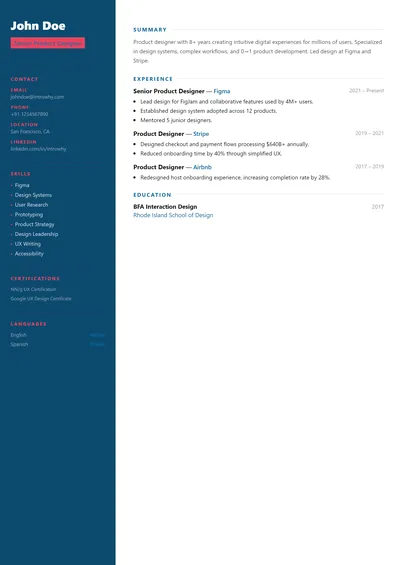
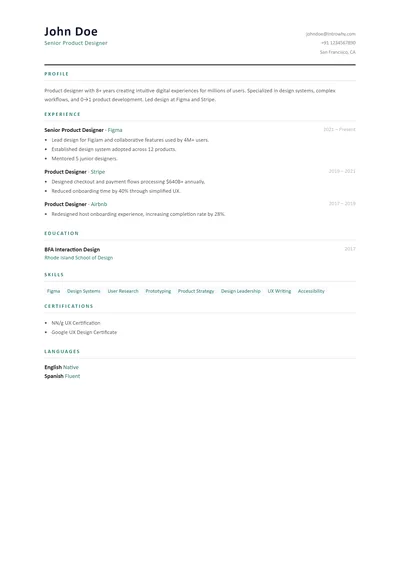
Best Templates for This Format


FAQ
What is a functional resume?
A functional resume organizes your experience by skill category rather than by job. Instead of listing roles chronologically, you group your accomplishments under headings like "Project Management," "Data Analysis," or "Customer Relations." This format can be effective for career changers, but use it carefully — many recruiters view functional resumes with suspicion because they can obscure employment gaps.
When should I use a functional resume?
Use this format when: You're making a significant career change and your job titles don't reflect your transferable skills.; You're returning to work after an extended break (caregiving, health, education).; Your most relevant experience isn't from your most recent job.; You have extensive freelance or project-based work that doesn't fit a traditional timeline.
Is this template free?
Yes. Build and preview your resume for free — no account required. You only pay a small one-time fee when you export as PDF or DOCX.