Two-Page Resume — Guide & Template
A two-page resume isn't a padded one-page resume — it's for professionals who genuinely have more accomplishments than one page can hold. Senior managers, directors, VPs, and specialists with 10+ years of relevant experience often need the extra space to do justice to their track record. The key is making sure page two is as strong as page one.
Build your two-page resume now →When to use
- You have 10+ years of relevant professional experience.
- You're applying for senior, director, VP, or C-suite roles.
- You have significant publications, patents, certifications, or speaking engagements.
- Your industry expects detailed resumes (healthcare, engineering, research, federal).
When to avoid
- You have fewer than 7-8 years of experience — edit harder and stay on one page.
- Page two is mostly filler (hobbies, outdated skills, irrelevant early-career roles).
- You're applying to a startup or tech company that values brevity.
Two-Page Resume Structure
- Page 1 — Above the fold Contact header, professional summary, your 2-3 most impactful roles with full detail (4-5 bullets each). This page must stand alone — if the recruiter never flips to page 2, page 1 should still land you an interview.
- Page 2 — Supporting evidence Earlier roles (condensed: 2-3 bullets each), education, certifications, publications, technical skills, volunteer leadership, board memberships.
- Header on Page 2 Repeat your name and "Page 2" at the top of the second page. If pages get separated during printing, the recruiter can reconnect them.
- Skills Section Can go on either page. Page 1 if skills are your primary selling point; page 2 if your experience speaks louder.
Example
- Built and led a 65-person engineering organization across 4 offices, growing the team from 18 engineers in 2 years.
- Drove platform reliability from 99.2% to 99.95% uptime while tripling traffic to 50M monthly requests.
- Established engineering career ladder (IC and management tracks), reducing voluntary attrition from 22% to 8%.
- Led $4.2M infrastructure migration from on-prem to AWS, completing 3 months ahead of schedule and 15% under budget.
Pro Tips
- The "page break test": cover page 2 with your hand. Does page 1 alone tell a compelling story? If not, restructure.
- Don't split a role across pages — keep each position's bullets together.
- Page 2 should end at least halfway down the page. A two-page resume that's really 1.25 pages looks like you padded it.
- Consider a "Key Achievements" section at the top of page 1 — a 4-5 bullet highlight reel of your career's best hits, before chronological experience.
- Older roles (10+ years ago) can be compressed to one line: "Senior Analyst, Deloitte, 2012–2015" with no bullets.
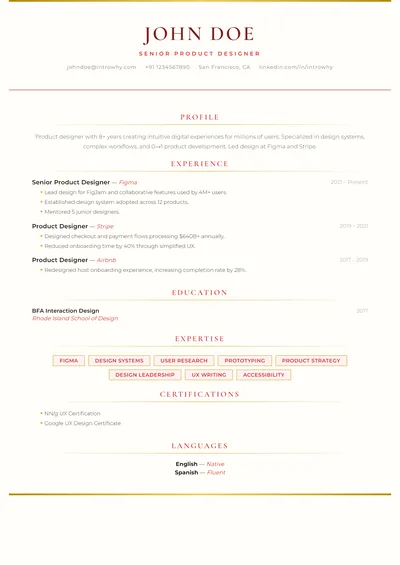
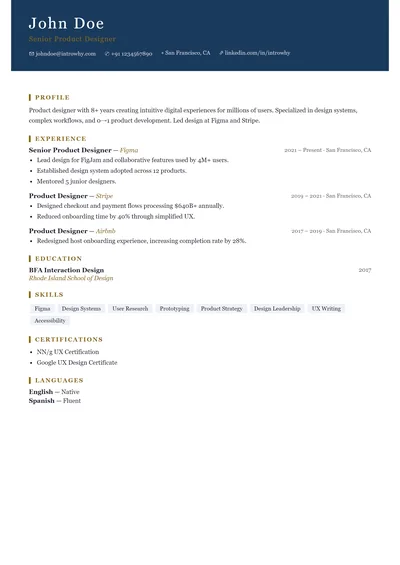
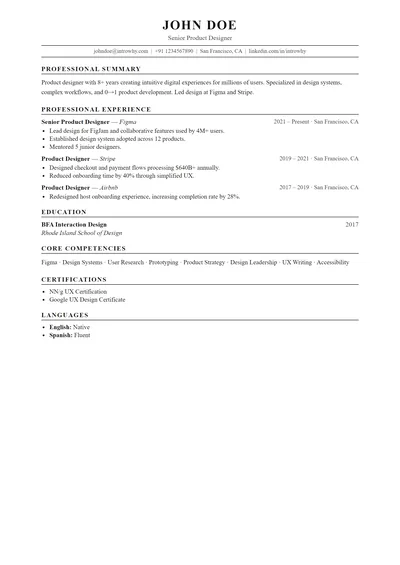
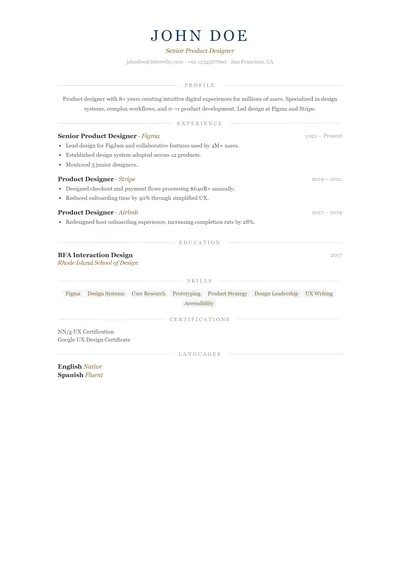
Best Templates for This Format
FAQ
What is a two-page resume?
A two-page resume isn't a padded one-page resume — it's for professionals who genuinely have more accomplishments than one page can hold. Senior managers, directors, VPs, and specialists with 10+ years of relevant experience often need the extra space to do justice to their track record. The key is making sure page two is as strong as page one.
When should I use a two-page resume?
Use this format when: You have 10+ years of relevant professional experience.; You're applying for senior, director, VP, or C-suite roles.; You have significant publications, patents, certifications, or speaking engagements.; Your industry expects detailed resumes (healthcare, engineering, research, federal).
Is this template free?
Yes. Build and preview your resume for free — no account required. You only pay a small one-time fee when you export as PDF or DOCX.